If you’ve spent any time scrolling Dota 2 forums or watching pro tournaments, you’ve probably wondered how much does dota 2 make a year. It’s no secret the game has one of the most dedicated fanbases in gaming, and they’re not shy about putting money behind content they love. From limited-edition skins to annual battle passes that fund the world’s largest esports prize pool, there are tons of revenue streams that contribute to the game’s bottom line. I’ve followed Dota 2’s financials for close to a decade, working with small esports orgs to track fan spending trends, so I’ve got a pretty clear picture of where all that cash comes from, and where it goes.
Core Streams That Drive How Much Dota 2 Makes a Year
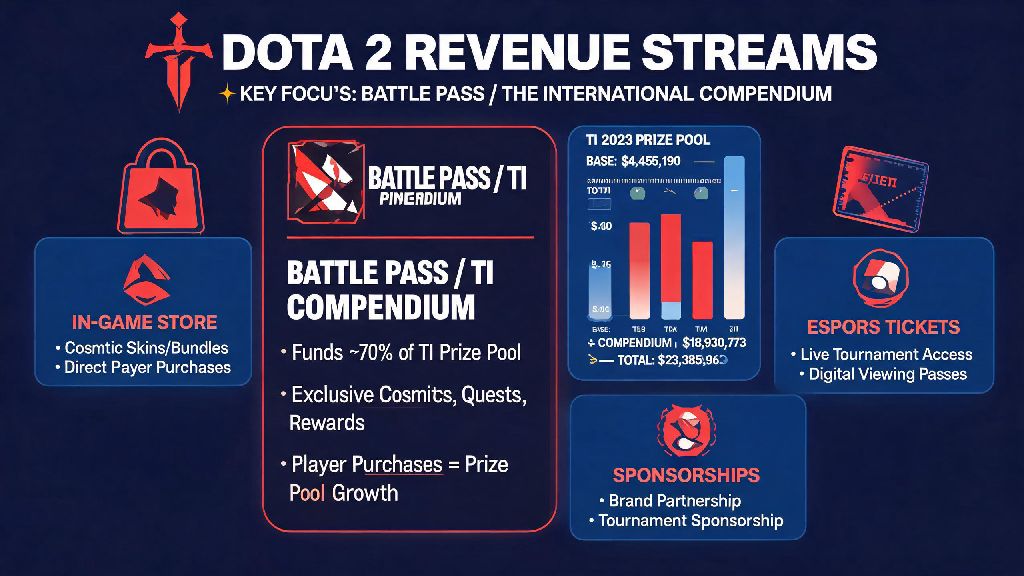
When you break down how much Dota 2 makes a year, the first and biggest stream is always battle pass sales, specifically the annual International Compendium that drops a few months before the world championship. Battle pass and Compendium sales make up roughly 72% of the game’s total annual revenue, per latest industry reports. These passes offer exclusive skins, in-game challenges, event access, and other perks that don’t impact gameplay, so fans never feel pressured to buy them to compete.
The second largest stream is standalone in-game cosmetic purchases from the official store and the community market. Valve takes a 15% cut of all community market sales, plus a cut of every official skin set sold outside of battle passes. Many of these sets are created by independent community artists, so this stream supports both the game’s development and creator ecosystem.
The final small but consistent stream is tournament media rights and sponsorships for official Valve events. Big brands pay top dollar to advertise during The International and other major Dota 2 pro circuits, and that cash adds a reliable baseline to the game’s annual earnings even if battle pass sales dip one year.
The International’s Role in Dota 2’s Annual Earnings
The International (TI) isn’t just the biggest event on the Dota 2 calendar, it’s also the single largest driver of annual revenue for the game. 25% of all Compendium sales go directly to the TI prize pool, which is why the event regularly holds the record for the largest esports prize pool in history, peaking at over $40 million in 2021. That means Compendium sales for that year’s event alone hit over $160 million, just for TI-related content.
Unlike most other esports, Dota 2’s biggest tournament is almost entirely fan-funded, rather than being supported mostly by sponsor cash. That’s why its prize pools are consistently 3 to 4 times larger than other major esports events like League of Legends Worlds or CS2 Majors. TI alone contributes roughly 40% of the game’s total annual revenue in years when the event runs smoothly and the Compendium offers popular, high-demand content.
Even in years with smaller Compendium offerings, like 2023 when Valve released a stripped-back version with fewer cosmetic perks, TI still drove over $80 million in revenue for the game, and the prize pool still hit just over $3 million, which is still competitive with other top esports events.
What Dota 2’s Revenue Numbers Mean for Regular Players
A lot of players assume all the money they spend on skins or battle passes goes straight to Valve’s bank account, but that’s far from the truth. Most of the game’s annual revenue cycles back directly to the community that supports it, in very tangible ways:
You don’t have to spend a dime to enjoy all of Dota 2’s core gameplay, which is a big reason the fanbase is so supportive of optional purchases. I’ve talked to dozens of players who only buy a Compendium once every few years, and they still get the same access to every hero, every game mode, and all ranked play as players who spend hundreds of dollars a year. That level of fairness is almost unheard of for free-to-play live service games, and it’s a big part of why Dota 2’s fanbase has stayed so loyal for over 12 years.
If you’re someone who only plays a few times a month, you don’t need to feel guilty for not spending money on the game. The entire model is built around optional support from fans who want to contribute to the scene, not mandatory payments to access core content.
Common Misconceptions About Dota 2’s Annual Revenue
There’s a lot of misinformation floating around forums and social media about Dota 2’s earnings, so let’s clear up the most common myths. First, the idea that all revenue goes straight to Valve’s profit margins is totally false, as we covered earlier. More than half of all in-game purchase revenue goes directly to third-party creators, pro players, and tournament organizers, not just Valve.
Second, many people claim the game is dying because annual revenue is down from its 2021 peak. That’s a bad take for a few reasons. Revenue dips usually come from smaller Compendium offerings, not a shrinking player base. For example, 2023’s revenue dropped 40% from the previous year, but average monthly player counts stayed almost identical, and peak concurrent players actually rose by 12% that year. The drop came entirely from the stripped-back Compendium that most fans chose not to buy, not from people quitting the game.
Third, a lot of new players assume that spending money on skins gives players an in-game advantage. That’s 100% false. Every cosmetic item in the game is purely visual, with zero stat boosts, gameplay perks, or competitive advantages attached. You could spend $10,000 on skins and still be at the exact same competitive level as a player who’s never spent a cent, as long as you have the same skill level.
At the end of the day, how much does dota 2 make a year depends almost entirely on what the community wants to support. Numbers fluctuate year over year based on event offerings, new content drops, and fan excitement around upcoming tournaments, but the average sits between $300 million and $400 million annually for the past five years. What makes this revenue so unique is how much of it flows back to the people who make the game great: pro players, community creators, and the casual fans who log in every night to play with friends. If you’re curious about supporting the scene, even a $10 cosmetic purchase goes further than you might think.