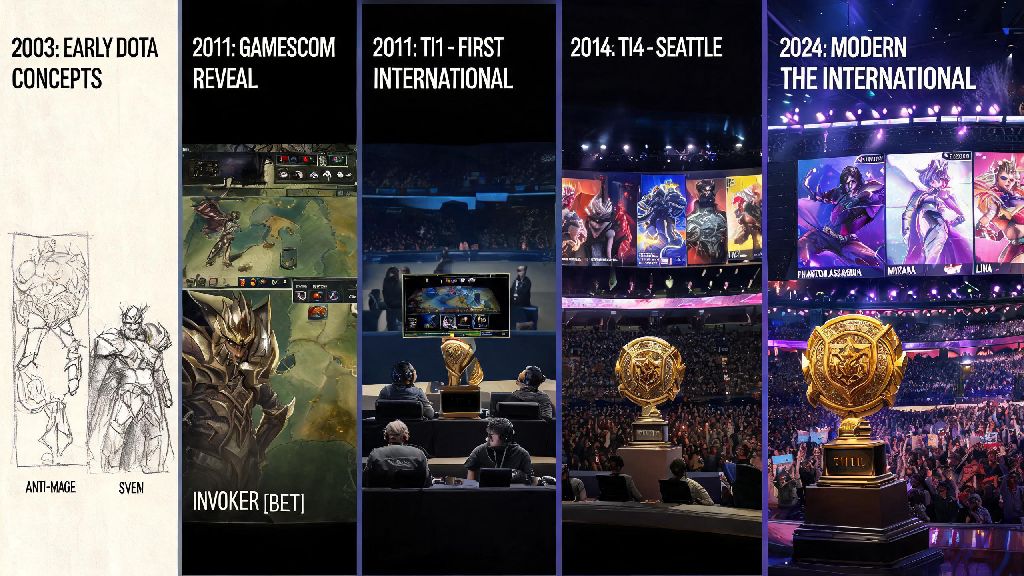
If you’ve ever queued for a ranked match, debated the best support hero in your group chat, or stayed up all night watching The International, you’ve probably wondered how old is Dota 2 at least once. It’s hard to believe the game that defined modern MOBA esports has been around long enough to have multiple generations of players, from teens who started playing in middle school to adults who now bring their own kids to local viewing parties. This post breaks down exactly when Dota 2 launched, what happened in the years before its official release, and how its long history makes it stand out from every other competitive game on the market right now.
How Old Is Dota 2, Exactly? Breaking Down the Official Launch Timeline
The answer depends on who you ask, but there are two clear dates most fans reference. The first public reveal of Dota 2 happened at Gamescom 2011, when Valve launched a closed beta for the game alongside the first ever The International tournament. Only a small group of pro players, content creators, and lucky community members got access to the beta at first, and invites rolled out slowly over the next two years. I’ve seen arguments in local Dota 2 groups about this all the time, with beta players insisting the game is two years older than official counts say it is.
The full, free-to-play public launch of Dota 2 happened on July 9, 2013. That’s the date Valve uses for official anniversaries, and it’s the most widely accepted starting point for calculating the game’s age. Most official sources count Dota 2’s age from its full public release in July 2013, meaning it has been active for more than a decade as of 2024.
The gap between the 2011 beta and 2013 full launch was intentional, per Valve’s typical development style. The team worked closely with existing Dota 1 players to test balance changes, fix game-breaking bugs, and make sure the standalone game stayed true to the spirit of the original mod that started it all. They didn’t want to rush a release that would disappoint the loyal community that had been playing Dota for years before Valve got involved.
The Pre-Launch History That Shaped Dota 2’s Identity
To really understand how old Dota 2’s core identity is, you have to go back even further than 2011. The game is a direct sequel to Defense of the Ancients, a user-created mod for Blizzard’s Warcraft 3 that first launched in 2003. The mod was built by a group of community developers, and in 2005, a developer going by the alias IceFrog took over as the lead designer for the project.
IceFrog led development of the Dota mod for four years, releasing regular balance updates, adding new heroes, and building out the complex mechanics that still define the game today. In 2009, Valve hired IceFrog to lead development of a standalone, official version of Dota, which would eventually become Dota 2. Many of Dota 2’s most beloved features, from the 5v5 lane structure to the complex hero ability synergies, were first tested and refined in the original Dota mod over 20 years ago.
That pre-launch history is why the game feels so familiar to players who cut their teeth on the original Warcraft 3 mod. Even small inside jokes, hero voice lines, and niche mechanic interactions that date back to the mod era are still present in Dota 2 today, as a nod to the community that built the game long before it was a mainstream esports hit. I’ve talked to players who started playing the original mod in college in the mid-2000s, and they still recognize almost every hero and mechanic when they log into Dota 2 today.
Key Milestones That Defined Dota 2’s First Decade
Over the years, Dota 2 has had dozens of major updates and moments that changed the game forever, and shaped the community that plays it today. Some of the most notable milestones from its first 10 years include:
You don’t have to be a competitive player to feel the impact of these milestones, either. Even casual players who only play a few matches a month noticed the massive performance boost from the Reborn update, or tried out Auto Chess when it blew up on social media in 2019. These moments didn’t just change the game—they brought new players into the community and kept existing fans engaged for years.
Why Dota 2’s Age Is One Of Its Biggest Strengths (And Weaknesses)
Most live service games die off after two or three years if they don’t keep bringing in new players, so Dota 2’s 10+ year run is incredibly impressive. Its age is a huge part of what makes it so special, but it also creates some unique challenges for both players and developers.
On the plus side, the game’s long history means it has an incredibly loyal, passionate community that cares deeply about its future. The competitive scene is stable and well-funded, with tournament circuits running year round all over the world. For new players, the game’s long history means there are thousands of free guides, tutorials, and community resources to help you learn, no matter what skill level you’re at. You can find a guide for almost any hero, any playstyle, and any rank, all made by players who have spent years testing what works.
The biggest downside of Dota 2’s age is the extremely steep learning curve. There are currently over 120 playable heroes, hundreds of items, and thousands of unique ability and item interactions that have been added over 10 years of updates. A lot of unwritten rules and community norms have also built up over time, which can be overwhelming for new players who don’t know them. It’s not uncommon for new players to get flamed in their first few matches for making mistakes that are totally normal for someone who didn’t grow up with the game.
If you’re a new player, don’t let the long history scare you off—most players are happy to help if you ask, and you don’t have to learn every mechanic all at once. I’ve seen new players pick up the game in the last couple of years and climb to Immortal rank in less than 12 months, so it’s definitely possible to catch up even if you didn’t start playing in the beta. You just have to be willing to learn, and ignore the occasional toxic player who takes the game too seriously.
At the end of the day, asking how old is Dota 2 is more than just a trivia question—it’s a way to understand why the game feels so different from every other MOBA out there. Its 20 years of roots in the original mod, plus 10+ years as a standalone game, have given it a level of depth and community that’s almost impossible for new games to replicate. Whether you’re a veteran who’s been playing since the first beta, a casual player who only logs in for event modes, or someone who’s thinking about trying it for the first time, there’s always something new to discover in Dota 2, no matter how old it gets.