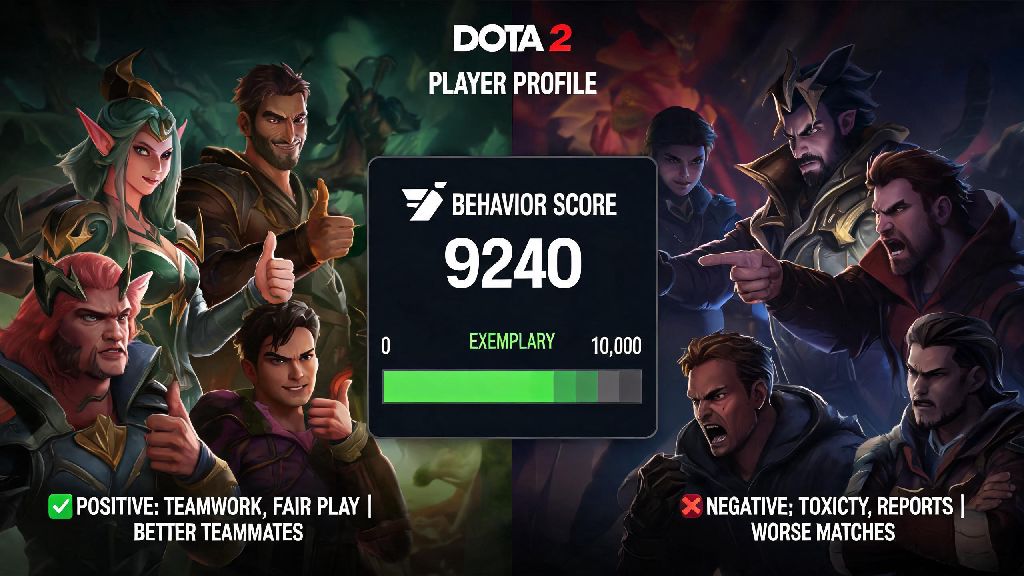
If you’ve ever queued for a Dota 2 match only to end up in a lobby full of abusive players, intentional feeders, or people who abandon halfway through, you already know how much match quality impacts your enjoyment of the game. Valve’s behavior score system is designed to sort players by their in-game conduct, so people with positive habits get matched with other respectful, team-focused players. But a surprising number of regular players don’t know how to check behavior score in Dota 2, or what their score actually means for their future matches. This guide breaks down every step of accessing your score, interpreting it, and making improvements if you want to climb to a better matchmaking pool.
How to Check Behavior Score in Dota 2 in 3 Quick Steps
Accessing your behavior score takes less than a minute once you know where to look, and you don’t need any third-party tools to get the official number straight from Valve. If you have the game installed on mobile via Steam Link, the process for how to check behavior score in Dota 2 is exactly the same, so you don’t have to wait until you’re at your desktop to see your latest rating. Follow these simple steps to pull up your score any time:
Note that your score only updates once every 1 to 2 weeks, so don’t panic if you don’t see changes right after a few positive or negative matches. Valve aggregates data from multiple matches before adjusting your rating to avoid temporary swings from one bad game where you might have snapped at a toxic teammate out of frustration.
What Your Dota 2 Behavior Score Actually Means
Your behavior score is a number between 0 and 10,000 that reflects how you conduct yourself in and out of matches. The vast majority of players fall between 7,000 and 9,500, so don’t stress if you don’t have a perfect 10k right away. Scores above 9,000 put you in the highest quality matchmaking pools, where you’ll almost never encounter abandons, intentional feeding, or verbal abuse in chat.
Lower scores come with tangible penalties that make the game far less fun. If your score drops below 6,000, you’ll be placed in low priority queues for longer wait times, and you’ll be matched with other players who have a history of toxic conduct. Scores below 3,000 can even lead to temporary or permanent account bans if you don’t adjust your behavior. That means this number isn’t just a vanity metric—it directly impacts how enjoyable every match you play will be.
I’ve seen players write off the behavior score system as meaningless, but after raising my own score from 6,800 to 9,700 over three months, I can confirm the difference in match quality is night and day. I barely see toxic chat anymore, and my teammates almost always stick around until the end of the match even if we’re losing by 20 kills at 20 minutes.
Key Factors That Impact Your Dota 2 Behavior Score
Valve doesn’t publish the exact weight of each factor that affects your score, but years of community testing and official hints have made it clear what actions move the needle up or down. You don’t have to be a perfect player to keep a high score, but avoiding common negative actions will go a long way.
The biggest negative impacts on your score come from abandoning matches before the game is marked as safe to leave. Even if you have a real emergency, multiple abandons will drop your score fast, so only queue for matches when you know you have 45 to 60 minutes free to play. Reports from other players also count heavily, especially if multiple people report you for the same offense like harassment or intentional feeding in a single match.
On the positive side, you can raise your score consistently by doing small, simple things every match. Getting commends from teammates and opponents for good teamwork, communication, or good sportsmanship is one of the fastest ways to boost your rating. You also get passive points for finishing matches without reports or abandons, even if you lose badly.
One common myth I see all the time is that muting toxic players will hurt your score. That’s not true at all—muting people who are harassing you doesn’t count against you, and it actually helps you stay focused on playing well instead of getting dragged into arguments that could lead to you getting reported too.
Practical Tips to Raise Your Behavior Score Fast
If you checked your score and it’s lower than you want it to be, don’t worry—you can raise it surprisingly quickly if you focus on positive conduct for a few weeks. These tips work for every rank, from Herald to Immortal, and you don’t have to change how you play to follow them.
First, avoid typing in chat when you’re frustrated. It’s easy to snap at a teammate who misses a crucial stun or feeds first blood to the enemy midlaner, but even a single snarky comment can lead to a report that drops your score. If you’re upset, take a 10 second break to breathe, or mute the other player if they’re provoking you. You can also use the in-game quick chat wheel for all communication instead of typing, which cuts down on opportunities for conflict.
Second, make a point to commend at least one player every match, win or lose. If your support wards the entire map all game, or your carry stays positive even when you’re 15 kills behind, give them a commend. Most players will return the favor if you’re being friendly, and even one commend per match adds up fast over a few weeks.
Third, never abandon a match unless it’s a genuine emergency. Even if your team is losing badly and half the team is intentionally feeding, sticking around until the ancient explodes will get you positive points for finishing the match, and you won’t take the big penalty that comes with an abandon. If you really can’t stand the match, you can always afk in the fountain without leaving, but keep in mind that intentional inactivity can still lead to reports if you’re not contributing at all.
I followed these exact tips when I was raising my own score, and I went from 6,800 to 9,000 in just four weeks of playing 3 to 4 matches a week. The change in match quality made the small effort completely worth it.
Whether you’re a new player who just started playing ranked or a veteran who’s been around since the early days of Dota 2, your behavior score is one of the most important numbers tied to your account. Taking 30 seconds to learn how to check behavior score in Dota 2 can help you understand why you’re getting matched with certain players, and take steps to improve your match quality over time. Even small changes to your in-game conduct can lead to a much more enjoyable experience every time you queue up for a match, so it’s well worth taking the time to check your score and make adjustments if you need to.