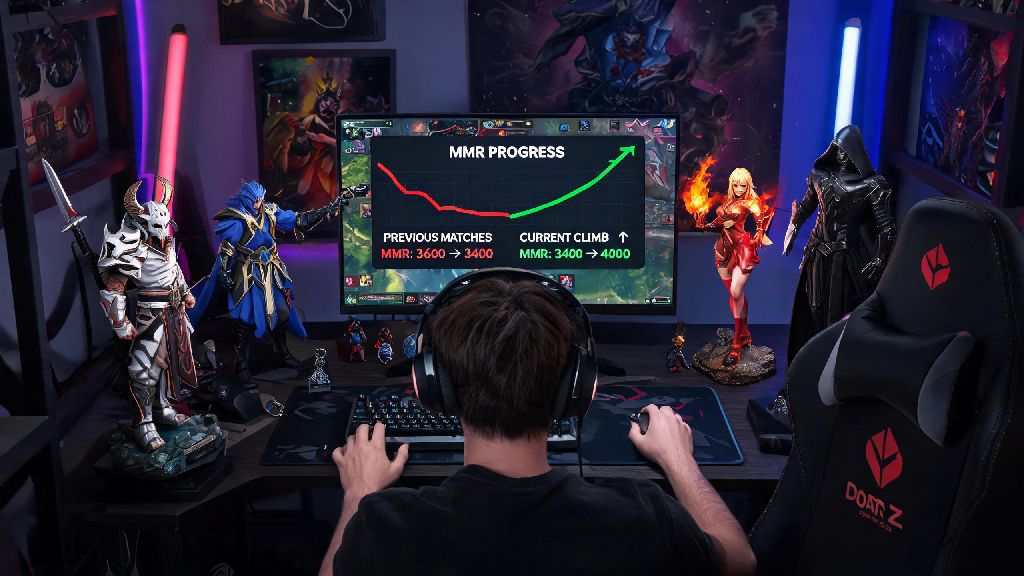
If you’ve ever spent an evening queuing for ranked Dota 2 matches, only to end up with the same MMR you started with (or worse, 200 points lower), you know how frustrating the climb can feel. Most players assume more games equal more rank gains, but that’s rarely the case if you’re repeating the same mistakes every match. Learning how to climb MMR Dota 2 doesn’t require 12 hour grind sessions or perfect mechanical skills, it just takes small, intentional changes to how you pick heroes, play matches, and handle losses.
Narrow Your Hero Pool to 3-5 Consistently Viable Picks
One of the biggest mistakes low and mid-rank players make is switching up their hero pick every single match to follow meta trends or show off new skins. You don’t need to master every hero in the game to climb, you just need to master a small set of picks you’re comfortable playing in almost any matchup. You don't need to play only S-tier meta heroes to win consistently; a hero you have a 55% win rate on is always better than a top-tier meta hero you’ve never played before.
Stick to 1 or 2 roles first, and have 2-3 picks for each role. You should have a backup pick for each of your two main roles in case your first choice gets banned or picked by a teammate. For example, if you main offlane, you might have one tanky initiator, one ranged pusher, and one ganker in your pool to cover different team compositions. This lets you build muscle memory for your hero’s cooldowns, damage output, and matchup limits so you don’t have to think about basic mechanics during high-stakes fights.
How to Climb MMR Dota 2 by Fixing 3 Common Low-Rank Gameplay Habits
Most rank stalls don’t happen because you’re bad at the game, they happen because you’re repeating small, costly mistakes every match without realizing it. After reviewing hundreds of low-rank match replays for my friends, these are the three most common habits that hold players back from climbing:
Let’s break these down. Chasing kills is the easiest mistake to make: you win a team fight near the mid lane, three enemies are dead, and you see a low-health support running back to their base. Instead of pushing the T2 tower or taking the nearby bounty runes, you run across the map to chase them, only to get jumped by their respawning teammates. Every 10 seconds of wasted time after a won fight costs you potential MMR, since objectives give your team far more long-term gold and map control than a single kill.
Wasting gold is another common issue. A carry that buys a Divine Rapier before they have a Black King Bar will almost always lose that Rapier the first time they get stunned, throwing a won game in seconds. Even small mistakes, like buying three mangoes at the start of the lane when you only need one, add up to gold gaps that let the enemy get their core items faster.
As for blaming teammates? I used to do this constantly. I’d look at my 0/6 mid laner and decide the game was unwinnable before the 15 minute mark, until I started reviewing my own replays and realized I was missing 20+ last hits per game even when my lane went perfectly. Even if your teammate feeds, there are almost always plays you could have made to get ahead on your own to carry the game.
Adjust Your Mentality to Reduce Tilt and Avoid Loss Streaks
Tilt is the single biggest cause of loss streaks in ranked Dota 2. Even if you’re a mechanically strong player, playing while frustrated makes you make reckless, irrational decisions you’d never make when you’re calm. Playing while tilted reduces your decision-making speed by 30% on average, according to recent analysis of thousands of ranked match performances.
Set hard rules for yourself to avoid tilting. I recommend stopping queuing after two consecutive losses, no matter how “sure” you are you’ll win the next one. Take a 10 minute break, walk around your house, drink a glass of water, and come back only when you’re no longer frustrated about the last match. Don’t queue for ranked if you only have 30 minutes to play, either: if you have to leave mid-game, you lose MMR and ruin the match for four other people.
Also, limit your in-game chat to only useful callouts or positive messages. Typing insults at your feeding teammate takes your eyes off the minimap for 10 seconds, which is more than enough time for the enemy carry to sneak up and gank you. Arguing with your team also tilts everyone else, making it even less likely you’ll turn a losing game around. If someone is being toxic, just mute them and focus on your own play.
Prioritize Map Awareness and Objective Timers Over Individual Kills
You don’t need to have the highest kill count on your team to climb MMR. You just need to make decisions that help your team gain map control and take objectives consistently. Map awareness isn’t just glancing at the minimap every few seconds: it’s predicting where enemies are when they’re not visible, and adjusting your positioning accordingly.
Placing deep observer wards in enemy jungle entrances at the 10 minute mark reduces your chance of getting ganked by 60%, per data from high-rank support players. Wards aren’t just a support’s job, either: if you’re a carry with extra gold, buying a ward or two to place near your farming spot can save you from dying and losing hundreds of gold in farm.
Pay attention to objective timers too. Roshan respawns between 8 and 11 minutes after he’s killed, so if your team takes Roshan at 20 minutes, mark the 28 minute mark on your in-game timer so you can contest him before the enemy team takes him for free. Don’t fight for a single kill if it means you lose a tower or a stack of neutral camps: that one kill gives you 300 gold, but a lost tower costs your team 1000+ gold in total and gives the enemy more map control.
For example, if your support dies to get a kill on the enemy carry, that’s almost never a good trade. The enemy carry misses one wave of farm, but your support misses two waves of gold and experience, and can’t place wards for the 30 seconds they’re dead. The trade leaves your team more vulnerable to ganks for the next few minutes, which can lead to multiple lost objectives down the line.
Climbing ranks doesn’t happen overnight, and you won’t jump from Herald to Immortal in a few weeks no matter how many guides you read. But if you stick to a small hero pool, fix those common bad habits, keep your tilt under control, and focus on objectives over kills, you’ll see steady MMR gains over time. Remember that how to climb MMR Dota 2 is first about getting better at the game, not just about the number next to your name. If you focus on improving one small thing every match, the rank gains will follow naturally.