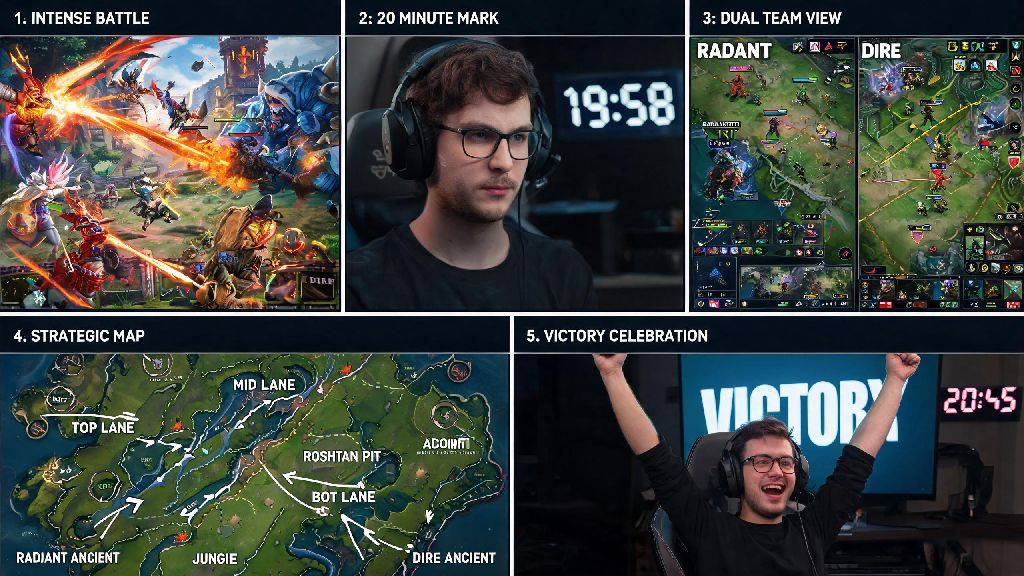
If you’ve ever stared at your clock 10 minutes before a dinner reservation wondering if you can squeeze in a quick match, you’ve definitely asked this question before. If you’re asking how long is a game of Dota 2 in 2026, you’re not alone—millions of players juggle work, studies, and other commitments, so knowing average match durations helps avoid cutting games short or missing plans. The 7.42 patch released earlier this year shifted meta pacing a lot, so older duration guides from past years are no longer accurate for current play.
How Long is a Game of Dota 2 by Match Type in 2026?
Exact game length varies a lot based on what mode you’re playing, so we’ve broken down average durations for the most popular queues this year. These numbers account for in-game time only, not queue time, so you’ll want to add 3 to 7 minutes of waiting time to each estimate depending on your region and selected mode.
There are always outliers of course. I once played an unranked all pick game last month that hit 92 minutes, after both teams kept trading buybacks and Roshan kills for almost an hour. Those cases are rare now, though, thanks to the patch’s anti-slog adjustments.
Core Factors That Change Dota 2 Match Duration in 2026
Once you know the average for your chosen mode, there are a handful of factors that can make your game much shorter or longer than expected. Learning these will help you guess game length before you even hit the 10 minute mark.
The biggest factor is draft. The 2026 7.42 patch heavily buffed early game gank heroes like Pudge and Spirit Breaker, so teams that draft heavy early aggression can end games as fast as 20 minutes in unranked play, while drafts focused on late game carries like Phantom Assassin or Spectre will almost always push game length past 40 minutes. If you see three late game cores on either team during pick phase, you can safely assume you’re in for a longer game.
Player skill gap is another big one. If there’s a smurf in your unranked lobby, the game can end in 15 minutes even in all pick, as the higher skill player will snowball out of control before your team can get items to defend. The opposite is also true: if both teams are evenly matched, you’ll probably go past the average duration for your mode.
High ground defense mechanics added in 7.42 make it harder to end games quickly if the defending team has good wave clear, so even if you’re ahead by 10 kills, you might have to wait for Roshan or a key item to push through. Disconnects and abandons can also cut games short: if a player leaves in the first 10 minutes, the match will end automatically after 5 minutes of safe leave for the rest of the lobby.
How to Estimate Your Upcoming Dota 2 Game Length Before Queuing
You don’t have to go in blind when you queue for a match, there are small clues you can pick up on during the pick and ban phase to guess how long your game will last. These tricks work for both ranked and unranked play, and they’re surprisingly accurate for 2026’s current meta.
First, look at the draft: If your team and the enemy both picked three late game cores, you can safely assume the game will go past 45 minutes, so if you only have 40 minutes free, you might want to dodge the queue if you’re playing unranked. If either team picked three early gankers or push heroes, you can expect a fast game that ends before 30 minutes if one team gets an early lead.
Check the average MMR of the lobby if you’re playing ranked: higher MMR lobbies tend to have longer games, as players make fewer mistakes that lead to early losses. Lower MMR lobbies often have more uncoordinated play and one-sided snowballs, so games usually end 10 to 15 minutes faster than the ranked average.
You can also check the recent match history of players in your lobby if you use third party tracking tools: if most of their recent games are over 50 minutes, they probably prefer slow, late game drafts. I’ve tested this trick dozens of times in 2026 ranked queues, and I’ve only been wrong about the estimated game length by more than 10 minutes twice, so it’s well worth the 30 seconds it takes to check.
Tips to Shorten or Extend Your Dota 2 Matches in 2026
Sometimes you want to finish a game as fast as possible because you have plans later, other times you want a long, satisfying grind match with your friends. These tips work for both scenarios, and they’re aligned with 2026’s current meta to be as effective as possible.
If you want to shorten your game, draft a push-heavy lineup with heroes like Death Prophet, Leshrac, and Lycan, and focus on taking towers as early as 10 minutes instead of farming jungle. Prioritize taking Roshan every 10 minutes once you hit level 15, as the Aegis buff lets you dive high ground without risking a key player dying and throwing your lead. Avoid long, drawn out fights in the jungle, and focus entirely on objective play to end the game as fast as possible.
If you want to extend your game, draft wave clear heroes like Invoker and Shadow Fiend, and focus on defending high ground while your carry farms for late game items. Avoid unnecessary fights in the mid game, and focus on farming neutral items that give your team an edge in 60+ minute matches. Don’t forget to buy back when you die in late game fights if you have enough gold, as a single buyback can stop the enemy from ending the game and let you push back to their base.
One important note: don’t intentionally extend games if your teammates are clearly in a hurry. It’s rude to drag out a lost match for 20 extra minutes just because you want to farm a full item build, and it can lead to reports if you’re intentionally throwing or avoiding objectives to make the game longer.
At the end of the day, how long is a game of Dota 2 depends entirely on the match type, draft, and skill level of the players in your lobby, but the 2026 averages give you a solid baseline to plan your play sessions around. You don’t have to cut plans short or rush through a match if you check the average duration for your chosen mode before you queue, and you can even adjust your draft to fit the time you have available. Next time you’re debating if you have enough time to play a match before dinner or a work call, refer back to these averages to avoid the frustration of leaving a game early or being late to your next commitment.