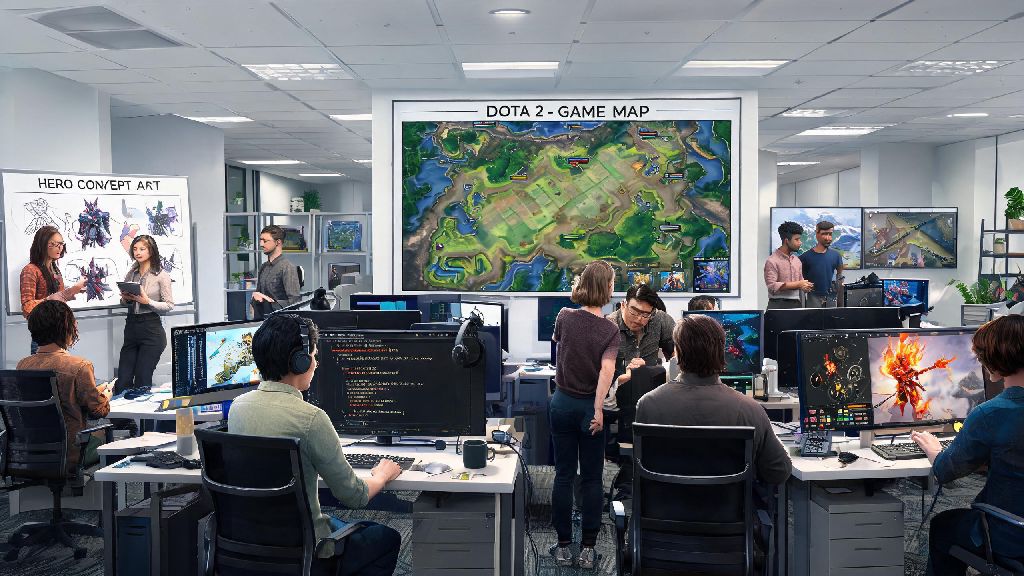
If you’ve ever queued for a ranked Dota 2 match, wondered why a balance patch took longer than expected, or marveled at the scale of The International’s production, you’ve probably asked how many people work on Dota 2. As one of the longest-running, most profitable MOBAs on the market, its development team structure is far less publicized than those of competing games like League of Legends, which has thousands of staff across multiple Riot Games offices. We pulled together public statements, job listing data, and insider accounts to give you the most accurate picture of who’s building and maintaining the game you love.
How Many People Work on Dota 2 Full-Time, Exactly?
Valve’s famously flat corporate structure makes it hard to pin down exact team sizes, since employees can move between projects whenever they want to pursue new ideas. That number comes from multiple sources: former Valve employees who have shared team sizes on career pages, public comments from Gabe Newell about the studio’s project structure, and active job listings for Dota 2 roles posted on Valve’s website over the past two years. As of 2024, the core full-time Dota 2 development team sits at roughly 35 people, focused exclusively on the game year-round.
That number swells significantly during peak work periods. In the three months leading up to The International every year, Valve pulls in staff from other teams including CS2 engineers, Steam platform specialists, and event production staff to help run the tournament, bringing the total headcount working on Dota 2 adjacent projects to over 150. If you count third-party contractors for localization, regional moderation, and merchandise production, the total number of people contributing to Dota 2 at any given time jumps to nearly 300.
That’s still an incredibly small team for a game with over 10 million monthly active players, but it aligns with Valve’s long-held approach of keeping core teams lean to avoid bureaucratic slowdowns. You won’t find layers of middle management on the Dota 2 team, so almost every full-time staff member is directly contributing to game updates or support instead of spending most of their time in meetings.
What Each Role on the Dota 2 Team Does
The small core team is split into specialized roles that cover every part of the game's lifecycle, from in-game balance to community support. Most team members wear multiple hats, especially leading up to big releases, but the core full-time roles on the team include:
It’s not rare for a game engineer to help fix event site bugs during TI, or a balance designer to help moderate beta tester feedback when a new hero is in testing. Unlike larger game studios, Valve does not require team members to stick to a single role long-term, so people can move between Dota 2 and other projects like CS2 or Half-Life whenever they want to pursue new ideas. This flexibility helps the team move fast when unexpected issues pop up, like a game-breaking bug that needs to be fixed within 24 hours.
Why the Dota 2 Team Is So Much Smaller Than Competitors
You might be surprised that a game with such a massive global player base only has 35 full-time core staff, but there are a few key reasons for that lean structure. First, Valve’s flat hierarchy means there are no layers of middle management, so every team member is directly contributing to the game instead of reporting up a chain of command or filling out unnecessary progress reports.
The Source 2 engine that Dota 2 runs on is shared across all Valve games, so the company doesn’t need separate teams to build and maintain core engine features for every title. Updates that improve performance for CS2, for example, also benefit Dota 2 players without extra work from the Dota team, cutting down on the number of specialized engineers needed exclusively for the MOBA.
A lot of community-facing content is also created by players themselves through the Steam Workshop. Independent artists submit skins, custom game modes, and even hero concepts, and the team only needs to review and approve the best submissions to add to the game, instead of building every cosmetic in-house. I’ve talked to a few custom game creators who’ve had their modes added to the official client, and they said the only interaction they had with the Dota 2 team was a single 30-minute call to walk through integration steps, and a cut of all revenue from their mode’s in-game purchases.
The small team size does have drawbacks, of course. Bug fixes can take weeks to roll out, and smaller community requests like new chat wheels or profile customization options often get pushed to the back burner when the team is focused on a big balance patch or TI prep. So when you see a new hero release take six months instead of two, that’s not because the team is slacking – it’s because they’re a small group working on multiple priorities at once, and they’d rather release a polished, well-tested hero than rush something broken to the client.
How the Dota 2 Team Works With the Global Community
Even with a small core team, the devs go out of their way to stay connected to the player base, which is part of why the game has stayed popular for over 12 years. First, they release public patch notes that explain every balance change in detail, including the reasoning behind adjustments to specific heroes or items, so players don’t have to guess why their favorite support got nerfed.
They also host regular AMAs on Reddit and Dota 2 community forums, where team members answer unfiltered questions from players about upcoming features, bug fixes, and esports plans. Unlike many studio social media accounts that only post pre-written announcements, the Dota 2 team often responds directly to player complaints or suggestions, and they’ve implemented hundreds of community-requested features over the years.
They rely heavily on community feedback to prioritize work, too. For example, when thousands of players asked for a better report system to reduce toxic behavior in ranked matches a few years ago, the team made that their top priority for 3 months, even pushing back a planned hero release to roll out the updated system. 10% of all Dota 2 Battle Pass sales go directly to The International prize pool, which means players themselves help fund the biggest esports tournament in the world every year, with the 2023 prize pool topping $30 million entirely from community contributions.
If you want to share feedback with the team directly, you can submit requests through the in-game feedback tool, or tag the official Dota 2 Twitter account – they actually read most of the messages they get, even if they don’t reply to every one. You can also sign up for the beta client through Steam to test new patches early and share feedback before changes go live to all players.
At the end of the day, the answer to how many people work on Dota 2 depends on what you count – 35 core full-time staff, up to 150 during TI season, and nearly 300 if you include contractors and community contributors. That small, agile team has kept the game running for over a decade, with a level of player input that’s almost unheard of for a major AAA title. Even if you’ve never thought about the people behind the patches, taking a minute to appreciate the work that goes into keeping your favorite MOBA running can make those frustrating ranked losses feel a little less personal.