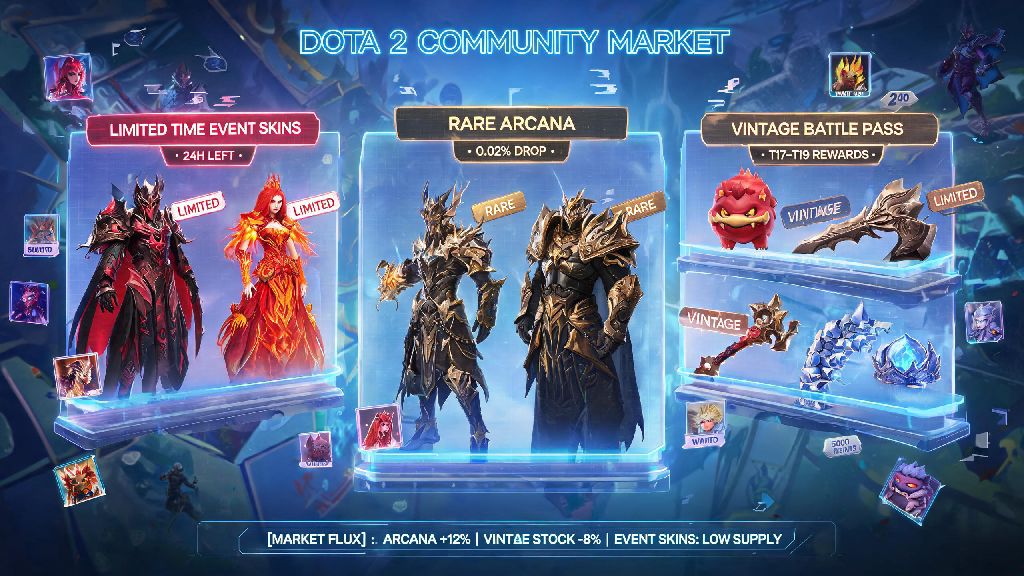
If you’ve spent years collecting rare arcana, limited-time event skins, and vintage battle pass rewards, you’ve probably wondered at least once how much is my dota 2 inventory worth. Maybe you’re considering selling your collection, trading for a specific high-value item, or just curious about the total value of all the cosmetics you’ve unlocked over thousands of hours of play. Valuing your inventory isn’t as straightforward as adding up original store prices, though, because the Dota 2 community market moves constantly based on supply, demand, and item rarity. This guide breaks down every step you need to take to get an accurate, real-world number for your collection, no guesswork required.
Key Factors That Determine How Much Is My Dota 2 Inventory Worth
Before you start adding up prices, you need to understand the core traits that make some Dota 2 items worth pennies and others worth thousands of dollars. Rarity tier is the most basic indicator, with ultra rare items like Aegis of Champions rewards or vintage Baby Roshans holding far more value than common drops from regular matches. Rarity alone doesn’t set the price though, so you’ll need to check other factors too.
Tradability status is the second biggest factor, because items that are permanently untradeable or locked to your account have no cash market value, even if they were expensive to unlock. Items that can only be gifted once are worth roughly 30-50% less than identical freely tradable versions, since buyers can’t resell them later. Limited availability also drives up prices drastically, especially for items from early International events that are no longer obtainable through any official channel.
Special attributes like custom gem effects, rare pattern variations, or unopened packaging can add extra value too. For example, a Dragonclaw Hook with a rare ethereal gem effect can sell for twice the price of a base version. Don’t assume custom names or descriptions add value though, most buyers prefer clean, unmodified items unless the custom content is widely recognized as rare or desirable.
Step-by-Step Process to Calculate Your Inventory Value Accurately
Start by sorting your entire inventory into two piles: tradable and non-tradable. You can ignore non-tradable items entirely if you’re calculating value for selling or trading, since they can’t be transferred to another player. If you’re just calculating for personal curiosity, you can add a sentimental value note for those items, but don’t include them in your official market total.
Next, look up each tradable item’s recent sale price across multiple platforms. Don’t just rely on active Steam Market listings, because many sellers list items for far more than they will actually sell for to bait inexperienced buyers. Check recent completed sales on the Steam Market first, then cross-reference with prices on trusted third-party Dota 2 trading platforms to get a median number. Steam market cut is 15% of every sale, so subtract that amount from all Steam prices if you’re calculating how much actual cash you would walk away with after selling.
For ultra rare items valued at over $500, look for recent sale posts from verified trading communities, as these items don’t sell often enough for public listing sites to have up-to-date price data. I once saw a player list a 2012 International Invoker Baby Roshan for $12,000, but the last actual sale of the same item was for $7,800 three weeks prior, so listings don’t always reflect real value.
Follow these quick checks to avoid overvaluing your items as you go:
Add up all the adjusted prices for your tradable items, and you’ll have a realistic total value for your inventory. If you have a very large inventory with hundreds of low-value items, you can use automated inventory tracking tools to speed up the process, just double check the prices of your 10 most valuable items manually to make sure the tool isn’t using outdated data.
Common Mistakes That Inflate Your Dota 2 Inventory Valuation
Most new players overvalue their inventory by 2-3x the actual market value, usually because they make a few simple avoidable mistakes. The most common error is adding the original price you paid for each item, instead of current market value. Lots of items drop in value after their release event ends, especially if they’re not limited edition. A battle pass arcana you paid $10 for during a recent International might only be worth $3 on the market a year later if it’s still obtainable through trade ups or random drops.
Sentimental value bias is another big issue. It’s normal to assign extra value to items you got as a gift from a friend, or earned during a big tournament win with your team, but that emotional value doesn’t translate to the open market. Buyers won’t pay extra for your personal memories attached to an item, so leave those feelings out of your valuation if you plan to sell or trade.
Many players also forget to account for trade locks when calculating immediate value. If your item is locked from trading for 7 days or more, it’s worth 5-10% less right now because buyers can’t get access to it immediately. I’ve had friends tell me their inventory is worth $2,000, but when we actually go through it, half the items are untradeable battle pass rewards, so the real market value is closer to $600. It’s disappointing at first, but it’s better to know the real number instead of getting your hopes up for an inflated estimate.
What to Do After You Know Your Dota 2 Inventory Value
Once you have an accurate number, what you do next depends entirely on your goals. If you were just curious, you can track your inventory value over time to see if your rare items appreciate in value, which many old limited-edition items do as supply drops over the years. If you want to sell your inventory, you have two main options: sell on the Steam Market for Steam wallet funds you can use to buy games or new Dota 2 items, or sell on verified third-party platforms for cash.
Scam prevention is non-negotiable if you plan to sell or trade high-value items. Never click links from random people offering to buy your inventory for above market value, and never trade first without a verified middleman if you’re doing a peer-to-peer trade. Most inventory scam victims lose hundreds or thousands of dollars because they skip basic safety checks, so take the time to verify every buyer or platform you use.
If you want to trade for other items, use your total inventory value to negotiate fair deals, just make sure you value the other person’s items using the same process you used to value yours, so you don’t end up on the bad end of an uneven trade. If your inventory is worth less than you expected, don’t stress. You can build a valuable collection over time just by playing regularly, completing event challenges, and holding onto limited-edition items instead of selling them immediately for quick cash.
At the end of the day, figuring out how much is my dota 2 inventory worth is a mix of checking real market data, accounting for hidden fees and restrictions, and separating emotional attachment from actual market demand. You don't need any special tools to get a solid number, just a little patience to go through your items and cross-reference prices from reliable sources. Whether you're looking to sell, trade, or just satisfy your curiosity, taking the time to get an accurate valuation will help you avoid costly mistakes down the line.