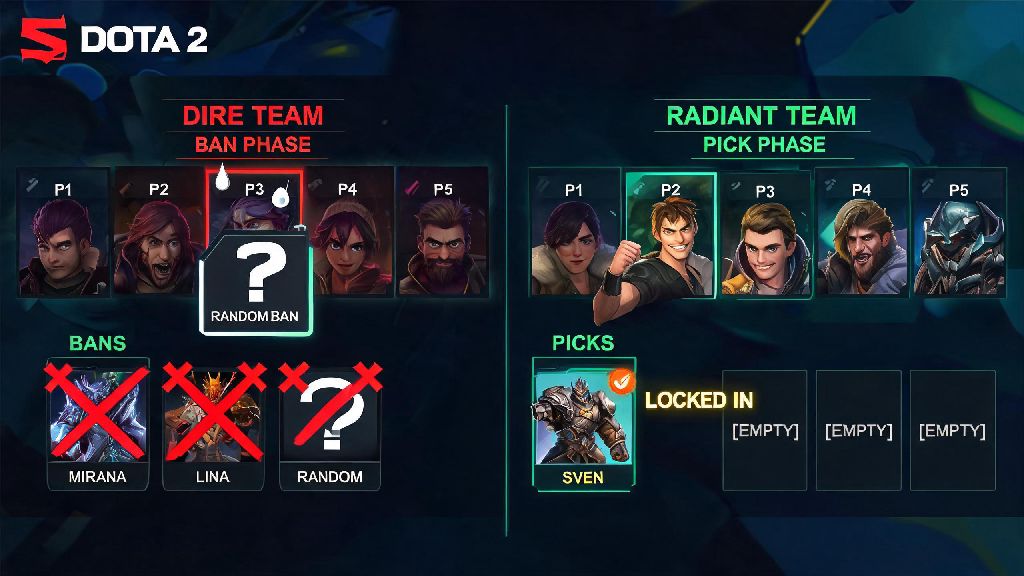
How many times have you jumped into a Dota 2 ranked draft, picked a random ban without thinking, then watched the enemy lock in a hero that completely demolishes your team 15 minutes in? Most players write off draft losses as bad luck, but the truth is that learning how to ban in Dota 2 is one of the most underrated, high-impact skills you can master to climb ranks fast. You don’t need to be a pro coach to make smart ban choices, either — all it takes is a little pre-draft planning and basic knowledge of what actually moves the needle for win rates.
How to Ban in Dota 2: First Understand What Your Bans Actually Do
A lot of new players treat bans like a way to get rid of heroes they find personally annoying, but that’s not the point of the system at all. Every ban you make should directly target the enemy’s possible win conditions or protect your team’s intended playstyle from being countered. Bans have two separate phases, and each has a different priority you need to account for.
First-phase bans happen before any player picks a hero, so these are for removing high-impact meta heroes or known smurf one-tricks that would break the game no matter what comp you run. Second-phase bans happen after the first three picks from each team, so these are for removing specific counters to the heroes your team already locked in. For example, if you picked Phantom Lancer first phase, your second-phase ban should target heroes that clear illusions instantly, not a random support you died to last game.
I’ve seen hundreds of players waste first-phase bans on niche heroes like Techies or Chen that less than 2% of the player base ever picks, even when there’s a Meepo smurf with a 70% win rate on the enemy team. That’s a surefire way to put your team at a disadvantage before the minions even spawn.
Common Ban Mistakes Even Intermediate Players Make
Even players in the Archon to Legend bracket make avoidable ban mistakes that cost them 30% more games than they need to lose. Most of these mistakes come from prioritizing personal preference over team success, or not paying attention to basic context before locking in a ban. The most common mistakes I see on a weekly basis are:
For example, if three of your teammates already want to pick strength heroes, banning a single intelligence support that you find annoying doesn’t help your team at all — you should be banning Earthshaker first, since his Echo Slam will delete your entire team in one teamfight if he gets a good blink initiation. Ban stacking is another huge issue: if you ban two carry heroes in first phase, you leave the enemy free to pick a broken mid hero like Invoker that can 1v9 your entire team with no resistance.
So take 10 seconds before you ban to check the enemy’s profile. If one of them has 400 games on Broodmother with a 62% win rate, that’s your first ban no questions asked. It doesn’t matter if you were planning to ban someone else — that one-trick will win the game for their team if you leave them open.
Ban Priority Rules for Every Rank Bracket
If you’re still figuring out how to ban in Dota 2 consistently, start by following these priority rules tailored to your rank bracket. What works for Immortal players won’t work for Herald players, since lower ranks don’t run coordinated comps or follow meta picks closely.
For Herald to Crusader ranks, your top ban priority is high-skill smurf heroes like Meepo, Invoker, Broodmother, and Huskar. Most players in these brackets don’t know how to counter these heroes, and a smurf picking any of them will almost always carry the game no matter what your team does. You don’t need to worry about countering comps here — just remove the biggest 1v9 threats first.
For Archon to Legend ranks, split your ban priorities 50/50 between smurf heroes and counters to your team’s intended comp. Most players in these brackets have a small pool of heroes they play well, so removing the heroes that counter their best picks will give you a huge advantage. Also keep an eye on meta win rates: if a hero has a 53%+ win rate that patch, you should probably ban them first phase if you don’t plan to pick them yourself.
For Ancient to Immortal ranks, bans are all about disrupting coordinated comps. If the meta is centered around a Wraith King + Oracle combo, ban one of the two first phase to break that strat entirely. You also need to pay attention to the enemy team’s signature heroes from past scrims or matches, if you have that data available. At this rank, every single ban counts, so don’t waste a single one on personal preference.
How to Adjust Your Ban Strategy Between Casual and Ranked Play
You don’t have to follow super strict ban rules for every game mode, obviously. For unranked, turbo, or arcade games, feel free to ban whatever hero you find annoying that day — the point of casual play is to have fun, not to climb ranks. If Techies makes you want to uninstall the game, ban him every casual game, no judgment here.
But for ranked play, you need to leave those personal preferences at the door. Every ban is a resource, and wasting one can cost you 25 MMR for no good reason. If you’re playing captains mode for tournaments or team scrims, your ban strategy needs to be even more intentional: scout the opposing team’s most played heroes ahead of time, and ban the linchpins of their most successful comps first.
One common mistake I see in solo queue ranked is players tilting when a teammate bans a hero they wanted to pick. Instead of typing angry messages in chat, adjust your pick and move on. It’s not worth throwing the game before it even starts over a ban, especially in solo queue where most players don’t communicate their intended picks ahead of time. Sometimes it’s even a good thing — if your teammate banned your intended pick, there’s a good chance that hero was a bad fit for the team comp anyway.
At the end of the day, learning how to ban in Dota 2 doesn’t require hours of studying pro replays or memorizing every hero counter in the game. All it takes is 10 seconds of planning before each draft, paying attention to the enemy team’s profile, and prioritizing your team’s success over personal annoyance. I climbed two full ranks from Legend 2 to Ancient 1 in just three weeks just by fixing my ban strategy and stopping wasting bans on heroes I hated playing against. You’d be shocked how much of an impact small changes to your draft approach can have on your overall win rate, so give these tips a try in your next ranked game.