I’ve spent the last four years coaching amateur and semi-pro Dota 2 stacks, ranging from 2k MMR casual teams to 7k MMR rosters competing in open qualifiers. The biggest myth I see new players buy into is that you need to be a top 100 MMR player to lead a team well. That couldn’t be further from the truth: learning how to coach in Dota 2 relies far more on structured thinking, communication skills, and understanding of team dynamics than it does on your ability to land perfect Mirana arrows. Most stacks lose not because their individual skill is worse than the enemy’s, but because they make uncoordinated decisions, waste advantages, and tilt easily when things go wrong. A good coach fixes all those gaps, even if you’re the lowest MMR person on the team.
How to Coach in Dota 2: Start With Pre-Match Draft Fundamentals
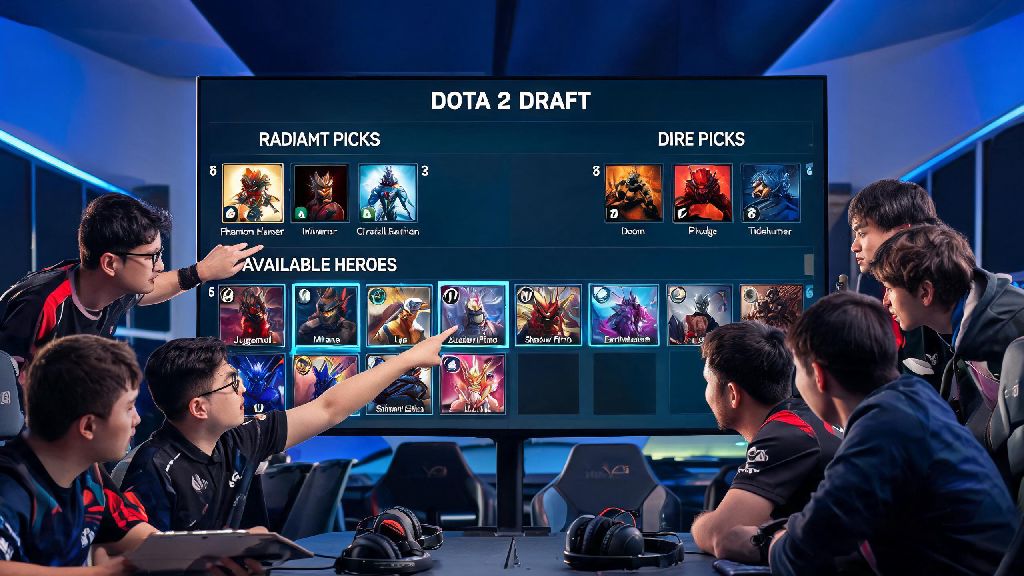
Drafting wins 40% of Dota 2 matches before the first creep spawns, but most casual teams pick heroes based entirely on what they feel like playing that day, no strategy involved. As a coach, your job during the draft isn’t to force every pick, but to act as a guardrail against obvious, avoidable mistakes. You don’t need to memorize every single hero counter to do this well, just stick to three core checks for every draft:
I once worked with a 3k MMR stack that had a 32% win rate across three months, almost entirely because they picked four late-game cores every single draft. We adjusted their strategy to include one early game ganker in every lineup, and their win rate jumped to 61% in just four weeks, with no individual skill improvements needed.
Structure In-Game Shot Calling to Avoid Decision Paralysis
The most common issue I see with uncoached stacks is five people yelling different calls at the same time when a fight breaks out. No one knows who to listen to, someone makes a bad call, the team wipes, and everyone blames each other. If you’re just figuring out how to coach in Dota 2, it’s tempting to make every call yourself, but that will stunt your team’s growth long term.
Instead, assign clear shot calling roles by game phase before the match even starts. For most teams, that means the position 4 roamer calls ganks and smoke plays in the first 15 minutes, the mid laner calls objective takes and team fights between 15 and 30 minutes, and the position 1 carry calls high ground pushes and late-game rotations. That way everyone knows who is in charge of decisions in each phase, no arguments mid-fight.
You should also track the cooldowns of high-impact enemy spells like Black Hole, Chronosphere, and Ravage, and call them out for your team when they come off cooldown. Most players are too focused on their own last hits or abilities to track enemy cooldowns, so this small task alone will cut your team’s bad fight rate by a huge margin.
Just make sure you avoid backseating every small decision your players make. If they take a bad fight that you didn’t call, don’t yell at them for it mid-match. Let them make small mistakes so they can build their own intuition, and save the feedback for after the game.
Give Constructive Feedback That Doesn’t Demotivate Your Team
A lot of new coaches make the mistake of only pointing out mistakes, often in front of the whole team, which makes players tilt, get defensive, and play worse over time. Your job as a coach isn’t to be a drill sergeant, it’s to help your players get better, and that means delivering feedback in a way that doesn’t make them feel attacked.
The best feedback structure I’ve found over the years is specific, targeted, and balanced between positives and negatives. Always tie feedback to specific in-game moments, not player skill. For example, instead of saying “you’re terrible at positioning as Support”, say “That stun you landed on the enemy mid laner at 10 minutes won us the river fight, but next time you’re warding the enemy jungle, try to bring the position 4 with you so you don’t get picked off alone. Your stack timings were perfect all game, that helped our carry get 100 last hits ahead by 20 minutes.”
You should also save 80% of your feedback for after the match, not mid-game. The only time you should give feedback during a match is if it’s a quick correction that can help your team win the next fight, like reminding them to buy detection against an invisible hero. Never single out a player in front of the whole team for a bad mistake. If someone is making the same error over and over again, pull them aside for a quick 1 on 1 chat after the game, where they won’t feel embarrassed to ask questions.
I once had a player on my team who stopped making any aggressive plays for two weeks after a coach yelled at him for missing a stun in front of the whole roster. We switched to private feedback for his mistakes, and he was back to making game-winning plays within a week.
Track Team Stats to Spot Hidden Weaknesses
You can’t fix what you don’t measure, and a lot of team weaknesses are invisible if you’re just watching matches without tracking any data. You don’t need expensive analytics software to do this, just keep a simple spreadsheet or notebook where you jot down 4-5 key stats after every match.
The most important stats to track for low and mid rank teams are average ward coverage duration, first 10 minute last hit difference for all cores, number of fights taken without vision, and smoke gank success rate. Ward coverage is the single most underrated stat for low and mid rank teams. Most teams I work with have less than 30% ward coverage on the map at any given time, which means they’re walking around blind and getting ganked constantly. Just setting a rule that your supports buy a ward every time they go back to base can raise that coverage to 60% or more, which will immediately cut your gank death rate by half.
I also recommend tracking what heroes your team has the highest win rate on, instead of forcing meta picks that no one is comfortable playing. Meta picks are strong, but a player who has 100 games on their comfort hero will play far better than they will on a meta hero they’ve only played twice.
I worked with a 5k MMR stack last year that kept forcing the new meta Tiny mid pick, even though their mid laner had a 30% win rate on the hero. We switched back to his comfort Invoker pick, which he had a 68% win rate on, and the team won four straight open qualifier matches the next weekend.
At the end of the day, learning how to coach in Dota 2 is far more about people skills than it is about your individual in-game rank. The best coaches I’ve worked with aren’t the highest MMR players, they’re the ones who can make their team feel supported, spot small consistent improvements, and keep morale high even when they’re on a losing streak. If you’re just starting out, offer to coach a friend’s casual stack for free first to build your experience. You’ll learn way more by working with real players and solving real problems than you will by watching hundreds of pro match replays alone. Even small changes to your team’s draft, communication, and feedback structure can lead to huge win rate gains in just a few weeks.